
Thermal tech on pistols: Not long ago, that was both unimaginable (for size) and unfathomable (for cost). There’s been a ton of progress in thermals in recent years, though, bringing size, performance, and cost into a neat little Venn diagram where companies like Infitac look to find their market share. With that in mind, let’s check out the Infitac Fast Mini FMP13 to see how it runs.
First, the tech specs as provided by Infitac.
Tech Specs
- Sensor: 256×192 resolution, 12μm pixel pitch
- Lens: 13mm F1.0
- Display: 1.4-inch 360×300 OLED touchscreen
- Refresh Rate: 60 Hz
- Magnification: 0.5x base (feels like true 1x for pistol presentation), digital zoom 1x/2x
- Field of View: 13.5° × 10.1°
- Battery: Single CR2, ~5 hours runtime
- Weight: 4 oz (113g)
- Durability: IP67 waterproof, -4°F to +122°F operating range, rated to 1200g recoil shock
- Mounting: Native RMR footprint; includes adapters/plates for RMSc, DPP, Glock MOS; optional Picatinny, 45° offset, 30mm ring, Acro
- Features: Multiple reticles/palettes (white hot, black hot, etc.), auto brightness, touchscreen swipe controls + physical buttons, USB-C external power option
- Extras: Three-year warranty, includes heated zero targets, spare CR2, tools, manual

Mounting and First Impressions
Inside the box, I found a pair of CR2 batteries, a cover, mounting screws, the manual, a pair of thermal targets for zeroing, and a little bit of swag.
I pulled the FMP-13 out of the box and immediately thought: this thing is tiny. This is smaller than a lot of other enclosed red dots on the market. While the RMR footprint is a handy and popular option, my plans start with this on a rifle so I tossed it onto a picatinny riser.

The controls are really simple. There are only two buttons and a touchscreen. The screen does the heavy lifting during field use, with swipes up and down cycling thermal view modes, swipes to the left cycling reticles, and swipes to the right changing reticle color. You can even pinch/zoom to go from .5x to 1x.
The two buttons are located on the left side of the optic, and each has an arrow facing forward or backward. I won’t detail every procedure available (read the manual), but these get you to the menus for calibration, zeroing, features like “shake awake”, and power off settings, where you can use the touchscreen for some of the finer details. As usual, running a thermal with limited controls is like operating a modern “smart” TV after you’ve lost the remote. It’s not ideal, but you’ll get through it.
Power on is fast. You can have this optic on and ready in just a few seconds.
Walking around my property carrying the FMP13 in hand gave me an appreciation for the screen’s image quality and smoothness. I had to run back and check the refresh rate, as the FMP13 is a lot smoother than the Infiray Iray Bolt 3-12 (50 MHz) that I reviewed a while back, despite that optic being over $3000.

Sadly, my RMR pistol is down and out for the moment, so I had to stick to a rifle.
Range Time.
Starting my nice rainy range session with the FMP13 on a Griffin Armament MKII 13.9″ barreled AR as the primary optic. Getting zeroed takes a bit longer than usual, but I can’t really say it was all too terrible.
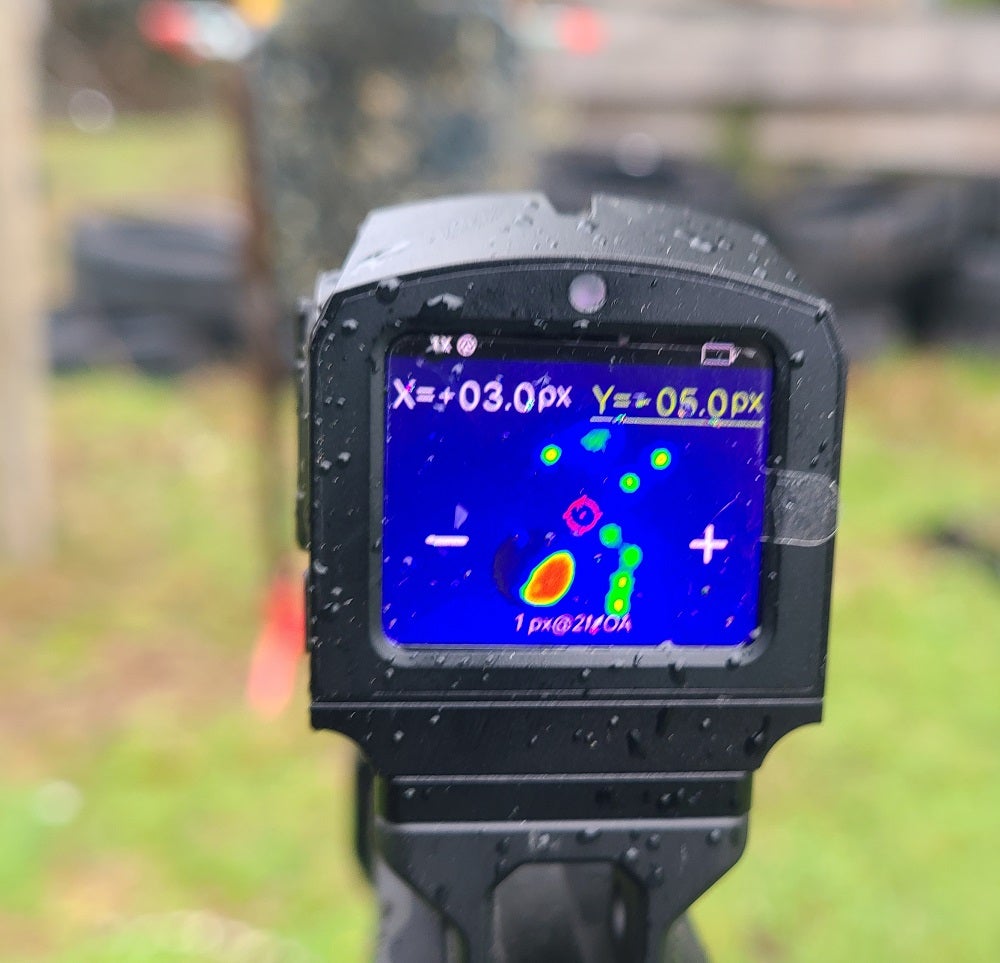
Open up the air-activated heat pack, remove the backing, and stick it to your target. It takes a minute or two to warm up and should last more than twenty minutes. A backing target like the Infinite Defense self-healing target makes it really easy to see impacts as the friction of the bullet passing through the rubber leaves enough residual heat to easily see on the FMP13, even brighter than the heat pack before it really got rolling.
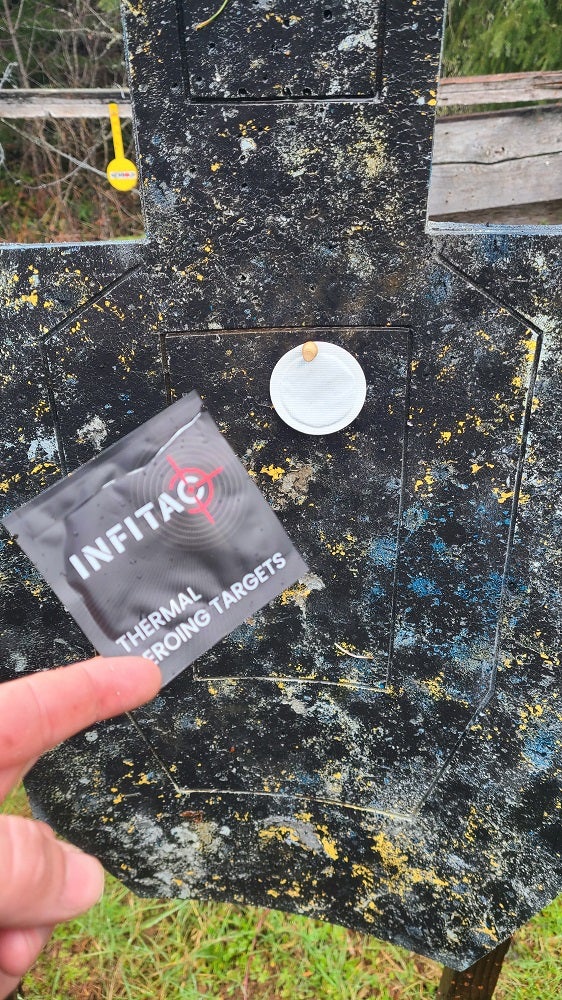
After getting zeroed using the touch screen, I worked my collection of steel targets at 25 yards. I thought the impacts on steel would leave a little residual heat, but no not really.
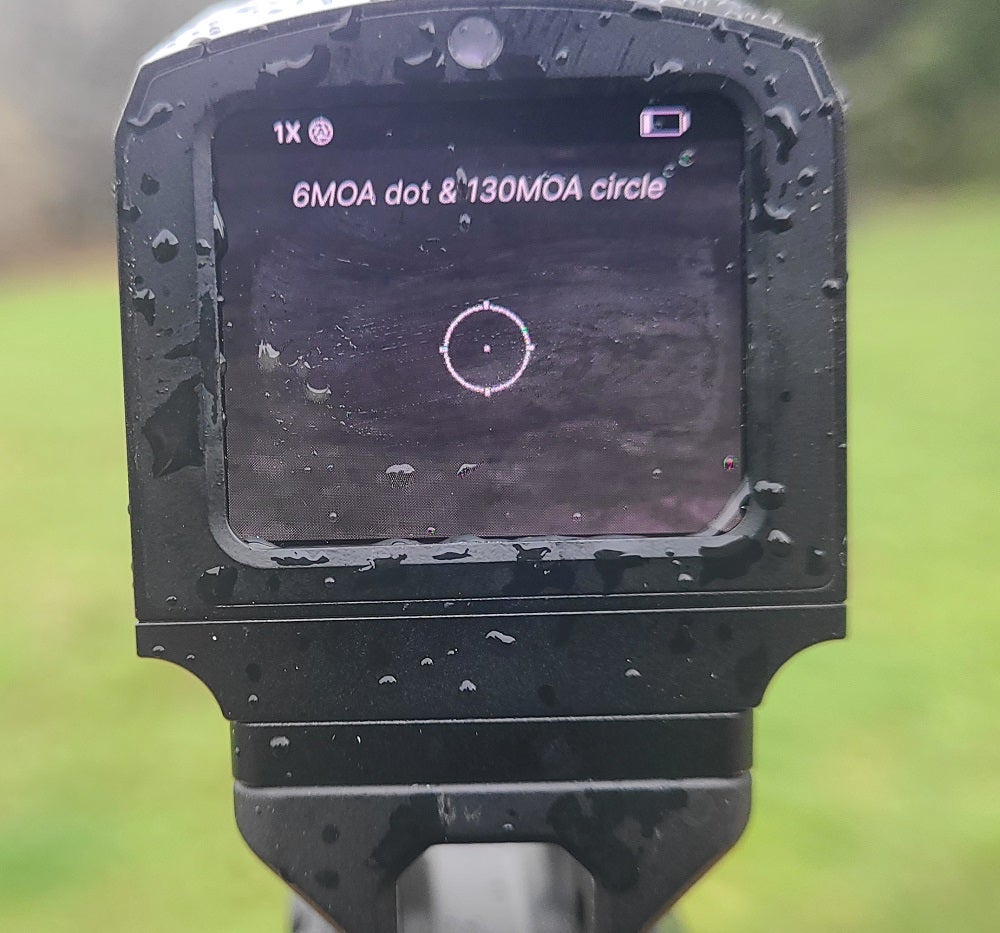
As a primary optic, the FMP13 shows both the benefits and limitations of a thermal optic. I normally wouldn’t consider a thermal a wise choice for a primary optic, aside from a few dedicated scenarios.
While thermals offer a unique capability, they’re both power hungry, and totally useless once that battery dies. Furthermore, you’re forced to choose between a wide FOV (at .5x magnification), or a more narrow view (at 1x).
However, that unique capability is amazing indeed. Neither good eyesight, nor Gen III night vision is going to help you spot that predator crouching in the brush. Whether a cougar or a two-legged meth head scoping out your shop, visibility leads to actionability.
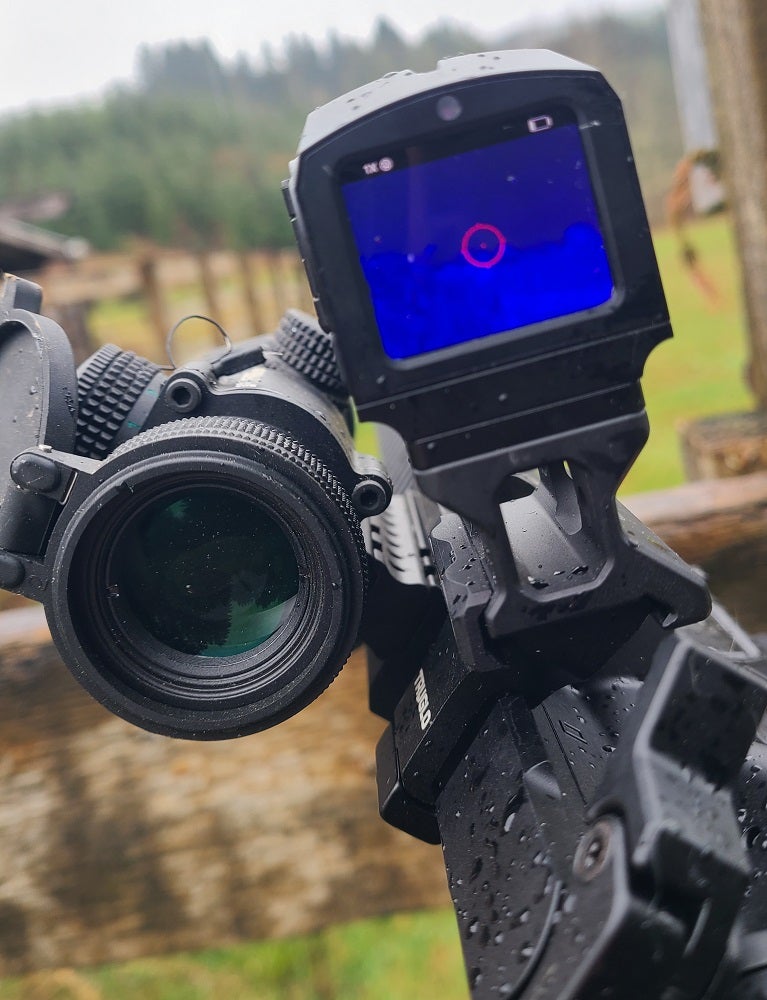
After swapping a 3x optic back on as the primary, I found a 45 degree picatinny mount that brought the FMP13 into a secondary optic role. Really though, I’d call it an auxillary optic, because it’s not there as a backup it’s there as an advantage.
Despite using an outdated mount, with adaptors further stretching the height over bore, the FMP13 was still in excellent position. I’d line up the target with the 3x optic, then rotate to the FMP13 and the transition was fast and effective.

Even better, once the 3x was lined up, I could peek over at the FMP13 screen and it was indeed centered on target as well. I could scan the target range for heat signatures without getting my optic out of shooting position. With this double line up I was able to work the steel at 100 yards despite the target being the same bleak temperature as everything else around here right now, about 40 degrees (F) and wet.
Infitac offers a sleek 45 degree RMR mount, for those interested.
Bottom Line:
The Infitac Fast Mini FMP13 isn’t trying to be a $3,000 do it all thermal optic. The battery is limited, and the resolution is effective but modest. The extras like internal image storage and video out aren’t here either.
But… The Fast Mini FMP13 is far from ineffective. A compact unit that provides solid resolution with a smooth screen refresh, ip67 durability, and a $699 price tag? This might be the best way to get into thermals yet.
Check it out!
