The integrally suppressed firearm or barrel is an idea almost as old but not quite as old as the silencer itself. One of the world’s first examples started showing up around WWII, with guns like the Welrod, the De Lisle Carbine, and of course, the legendary STEN Mk II(S).
The integrally suppressed firearm market has more or less stagnated, save for but a few modern manufacturers who are daring enough to step outside the mold of the more traditional suppressor design. However, this may not be the case for much longer, given our current rush on anything and everything suppressor-related.
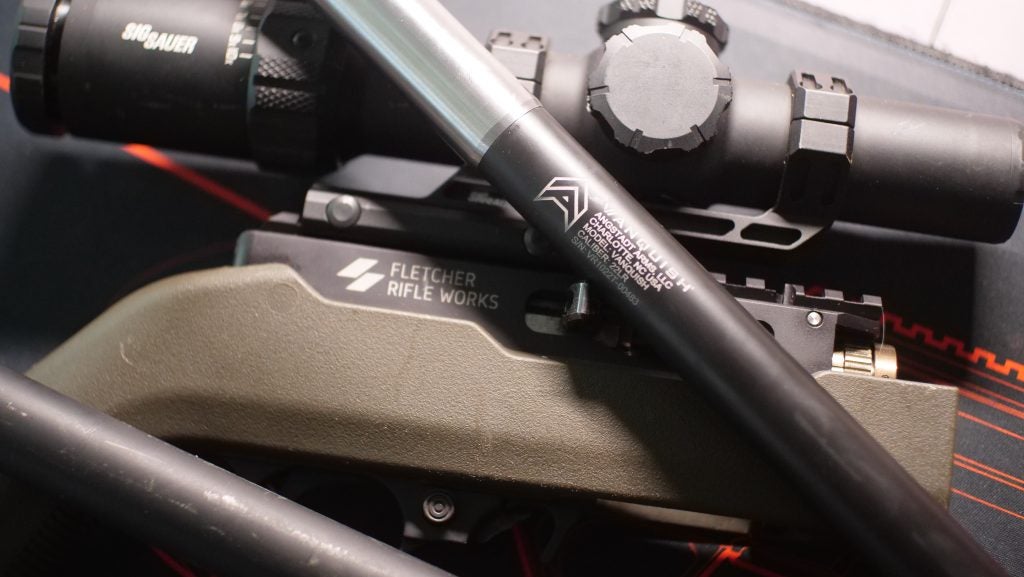
Today, we’ll go over what exactly integrally suppressed firearms are, what some of their advantages are, and a close look at one particular example, the Angstadt Arms Vanquish 22, that I think most people could benefit from.
What Is Intergal Suppression?
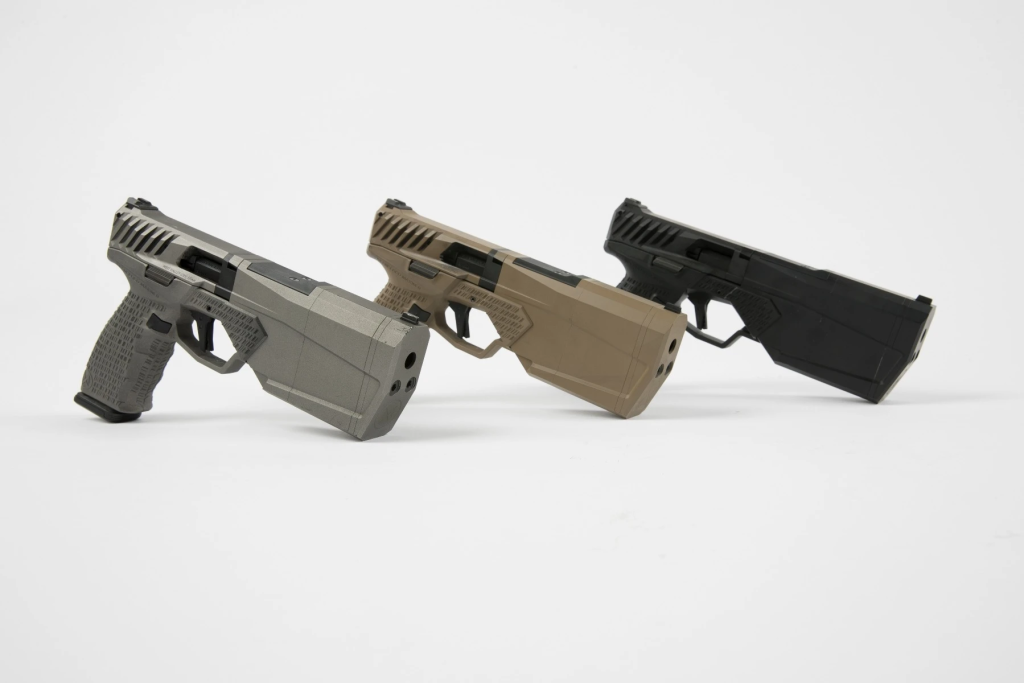
As opposed to the traditional method of extending the effective length of the barrel by attaching a suppressor to the end of the muzzle, integrally suppressed firearms feature a suppressor that is permanently attached and often built around the barrel creaing a single uniform assembly.
This design, while it often features more traditional suppressor features like internal baffles, also often has ports machined into the barrel that help bleed off excess gas and thereby reduce the muzzle velocity of the round exiting the barrel, further reducing the firearm’s sound signature. The most notable example of this is probably the Heckler & Koch MP5SD.
One recent example I’ve had the pleasure of testing out is the Angstadt Arms suite of “Vanquish” 22LR integrally suppressed barrels on a couple of different platforms. Throughout this article, we’ll be using these barrels as an example, as they are one of the very few genuinely accessible integrally suppressed barrels available on the market, and are compatible with off-the-shelf firearms like the Ruger 10/22.
NFA Classification
Under the National Firearms Act, integrally suppressed barrels are classified as suppressors regardless of the host firearm. This classification requires purchasers to complete an ATF Form 4 transfer, pay a $200 tax stamp, and undergo the standard NFA approval process, including fingerprints, photographs, and background checks. The barrel assembly itself is the regulated item—not the host firearm. If you’re curious about this processs we’ve written articles about that in the past, and Silencer Shop also has a couple of handy guides on their social media as well for first timers.

Even under the heavy hand of the NFA, integrally suppressed barrels or firearms confer one slight advantage when it comes to the paperwork: only the barrel requires the suppressor tax stamp, while the host firearm remains a standard Title I firearm unless it meets other NFA criteria – Like my NFA Angstadt Arms Vanquish AR-22, which is still a two-stamp gun since it currently features a 12″ barrel, which itself is a suppressor. Angstadt also sells a 16″ variant which would still give you all the fun the AR-22 has to offer, just with one less set of paperwork for the host receiver.

Another small advantage that you may have noticed already is that the suppressor’s length counts toward overall barrel length for legal purposes, meaning a 16-inch integrally suppressed barrel maintains legal rifle status without requiring a Short Barreled Rifle stamp. This makes integrally suppressed systems shorter and more maneuverable than a 16-inch barrel with a separate suppressor attached, while avoiding the complexity and cost of dual tax stamps.
Other Advantages of Integral Suppression
Integrally suppressed barrels offer several performance advantages over threaded suppressors. The permanent integration eliminates the point-of-impact shift that occurs when mounting or removing a detachable suppressor, since the suppression system is always in the same position relative to the barrel and doesn’t add any extra weight to the system or mess with the barrel’s harmonics. This consistency should improve accuracy while running a suppressed system.

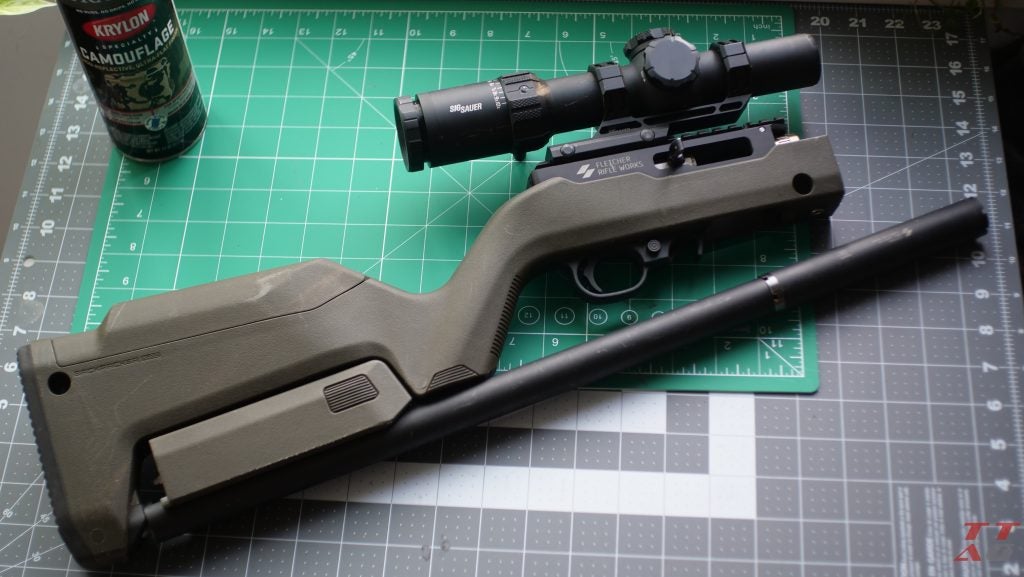
The integrated design also creates superior weight distribution and balance compared to adding a heavy suppressor to a standard barrel. There’s no risk of the suppressor loosening during firing, no concerns about proper alignment causing baffle strikes, and no need to verify correct installation before each shooting session. The overall package is typically more compact than a standard barrel with an attached suppressor, improving maneuverability in confined spaces. If we take my Fletcher Rifle Works Open Top 11/22 Takedown rifle, the addition of the Vanqush-22 barrel means that in its collapsed and deployed configurations, I can maintain the rifle’s ability to be quiet and compact without the need to find extra storage for the suppressor or deal with the extra length of the suppressor.

Despite these advantages, integral suppression does have its downsides, especially when it comes to rimfire systems, simply due to the increased fouling. Rimfire cartridges, particularly .22 LR, produce substantially more fouling than centerfire ammunition due to unburned powder, lead particulate from unjacketed bullets, and carbon residue. In traditional baffle style fully welded or non-user serviceable suppressors, this fouling accumulates rapidly on baffle surfaces and interior walls. This is why a lot of them are user serviceable.

Manufacturers typically recommend cleaning rimfire suppressors every couple of hundred rounds to prevent baffles from becoming fused together by lead and carbon buildup. This maintenance requires complete disassembly, soaking components in solvent, and manual scrubbing, which, as we mentioned in a previous article, can be a time-consuming process.

With traditional integral suppressors using sealed baffle stacks, this cleaning challenge becomes even more laborious and complex if you don’t have the right equipment, because accessing the baffles often requires specialized tools or machines that can reach where picks can’t.
Luckily, the Vanquish design in our example photos today doesn’t fall victim to this since it has no baffles, just ports, which are easy to clean with a simple swipe down of CLP. Afterwards, I like to blast away any leftover carbon deposits in the ports with some CCI stingers.

Why I Think Intergal Suppressors Are Going to Make a Resurgence
The integrally suppressed firearm market has remained relatively stagnant for decades, with a few rare and beautiful exceptions. However, several converging factors suggest to me that we’re on the verge of a renaissance. The recent push toward increased suppressor accessibility, combined with new designs aimed at a budget-oriented audience, like the Angstadt Arms Vanquish-22 and Vanquish AR-22, tells me that manufacturers are willing to challenge traditional suppressor architecture and explore new solutions to old problems.
With NFA tax stamps on suppressors and SBRs currently at $0, the barrier to entry for suppressor ownership is at the lowest it has ever been. More shooters will be entering the market looking for practical, low-maintenance options for guns they already own, and the Vanquish barrels’ baffle-free design addresses the primary complaint that has held back rimfire integral suppressor adoption: the constant cleaning. At the same time, the Vanquish 22 and its ilk deliver the inherent accuracy and balance advantages that make integral suppression attractive in the first place.

As more companies in the NFA space recognize that modern manufacturing techniques and creative engineering can solve the maintenance and reliability issues that plagued earlier integral designs, we’re likely to see increased investment and innovation in this category, which is likely to spur a lot of new competition. The combination of regulatory momentum, proven modern designs, and a growing suppressor market creates the perfect conditions for integrally suppressed firearms to finally receive the attention and development they deserve after years of being overshadowed by more traditional thread-on or QD designs. Of course, I don’t think they’ll ever quite dethrone them, but I hope to see more of them in people’s gun safes in the near future.